


Get a detailed and recently updated comparison of widely used demand planning artificial intelligence software, including both for growing & enterprise brands, evaluated on forecasting depth, integrations, and how well each software supports real-world planning workflows.
Comparison of 8 Best AI Demand Planning & Forecasting Software
Note: This list has been curated using information from the source website as well as third party review platforms. Information might have changed at the time of reading.
1. Built for future of eCommerce 👉 Prediko's AI Demand Planning Software
Prediko is a highly rated (250+ reviews on Shopify app store with a rating of 4.9) AI-powered demand planning software for eCommerce & D2C brands.
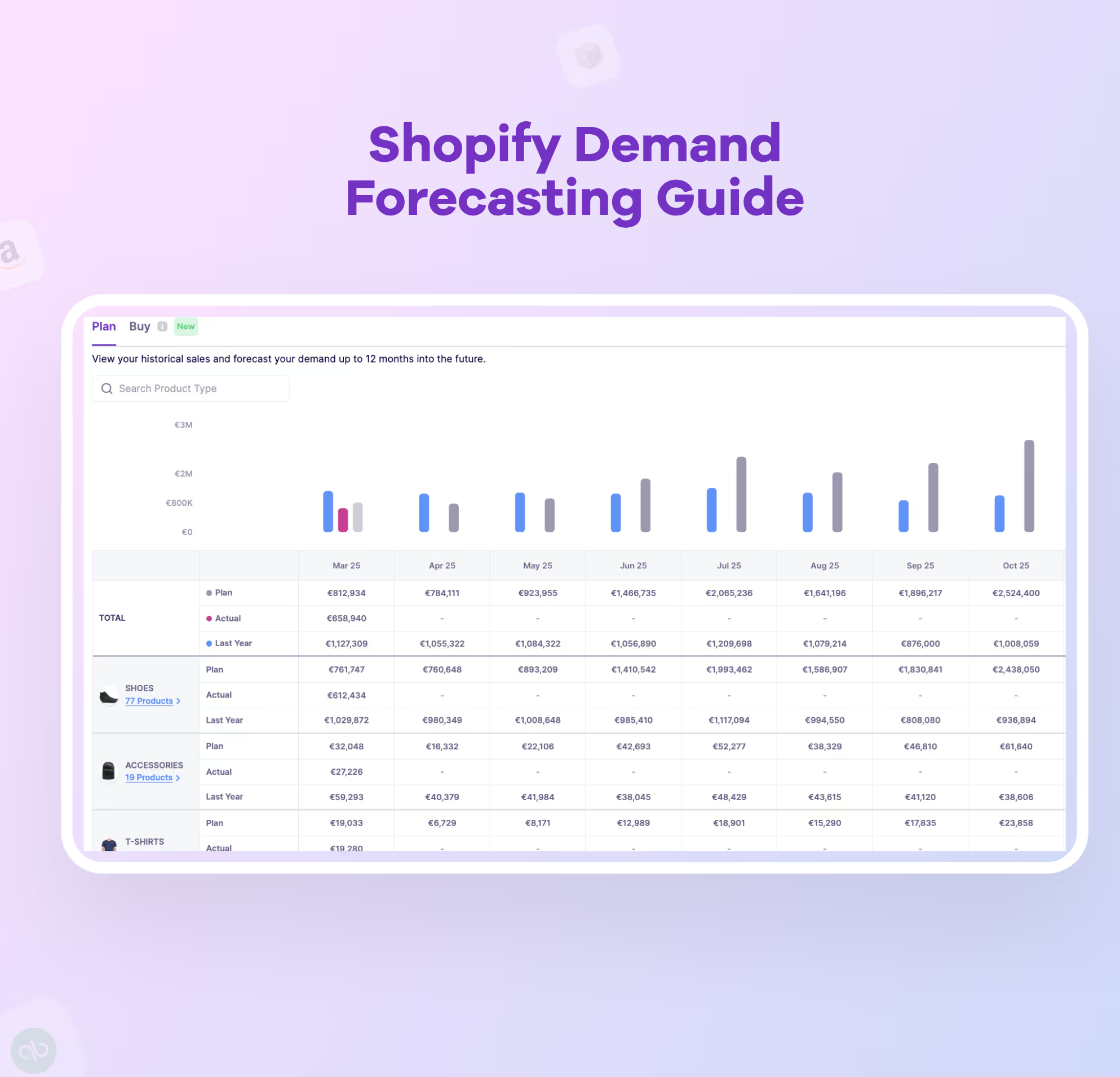
Unlike traditional and old school ERP-based tools, Prediko is built from the ground up for direct-to-consumer brands. It pulls live data from Shopify & Amazon, forecasts at the SKU and location level, and then surfaces specific buying recommendations.
Key features
- AI trained on 15 Million+ SKUs across 25+ industries
- SKU-level, location-level, and category-level forecasting
- Buying Table for forecast-to-PO in one step
- Raw material forecasting for manufacturing brands
- Plan vs. actuals tracking
- AI agent, PIA, for creating POs, refreshing forecasts, and surfacing SKU risks.
Learn about different AI Agents in inventory forecasting
Who it's built for
D2C brands on Shopify and Amazon managing SKU complexity, multiple warehouse locations, bundles, raw materials, or subscription products. Track inventory flow by location, monitor KPIs like turnover and shrink, and build demand models that self-correct over time.
However, it's built for high-SKU environments and doesn't serve enterprise supply chains or large offline retailers well.
Pricing
Starts at $49/month. All plans include unlimited SKUs, users, and purchase orders. 14-day free trial available.
2. Blue Yonder (formerly JDA)
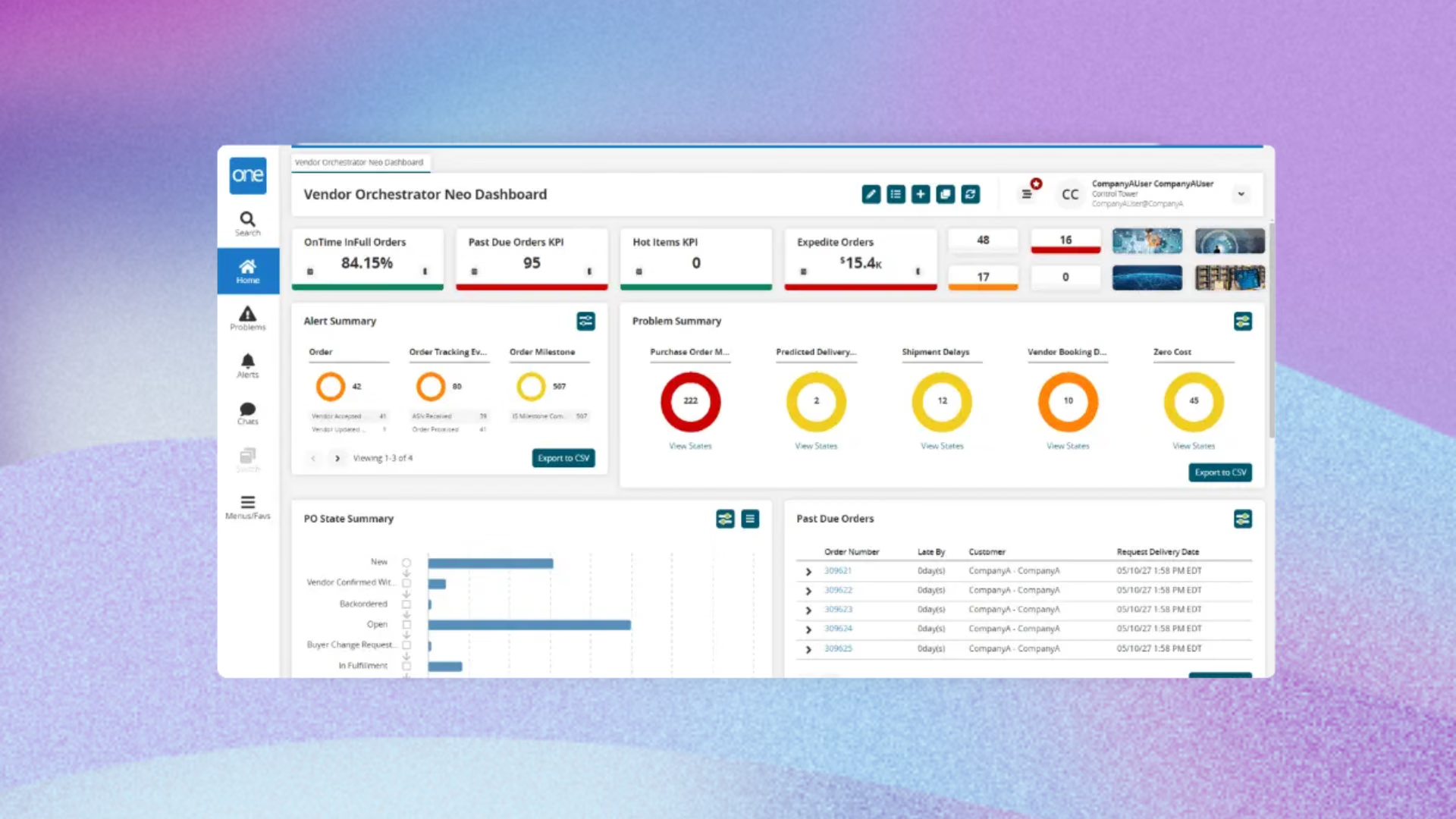
Blue Yonder is an enterprise supply chain and demand planning platform used by large retailers, CPG companies, and manufacturers. It combines ML-based demand sensing with supply chain orchestration across complex, multi-tier networks.
Key features
- Demand sensing using real-time market signals
- Machine learning across SKU, channel, and geography
- Integrated supply chain planning and execution
- Scenario modeling and risk simulation
Who it's built for
Large enterprises with complex supply chains, multiple distribution tiers, and global operations. Implementation typically requires months and dedicated IT resources.
Pricing
Custom enterprise pricing.
3. SAP Integrated Business Planning (IBP)
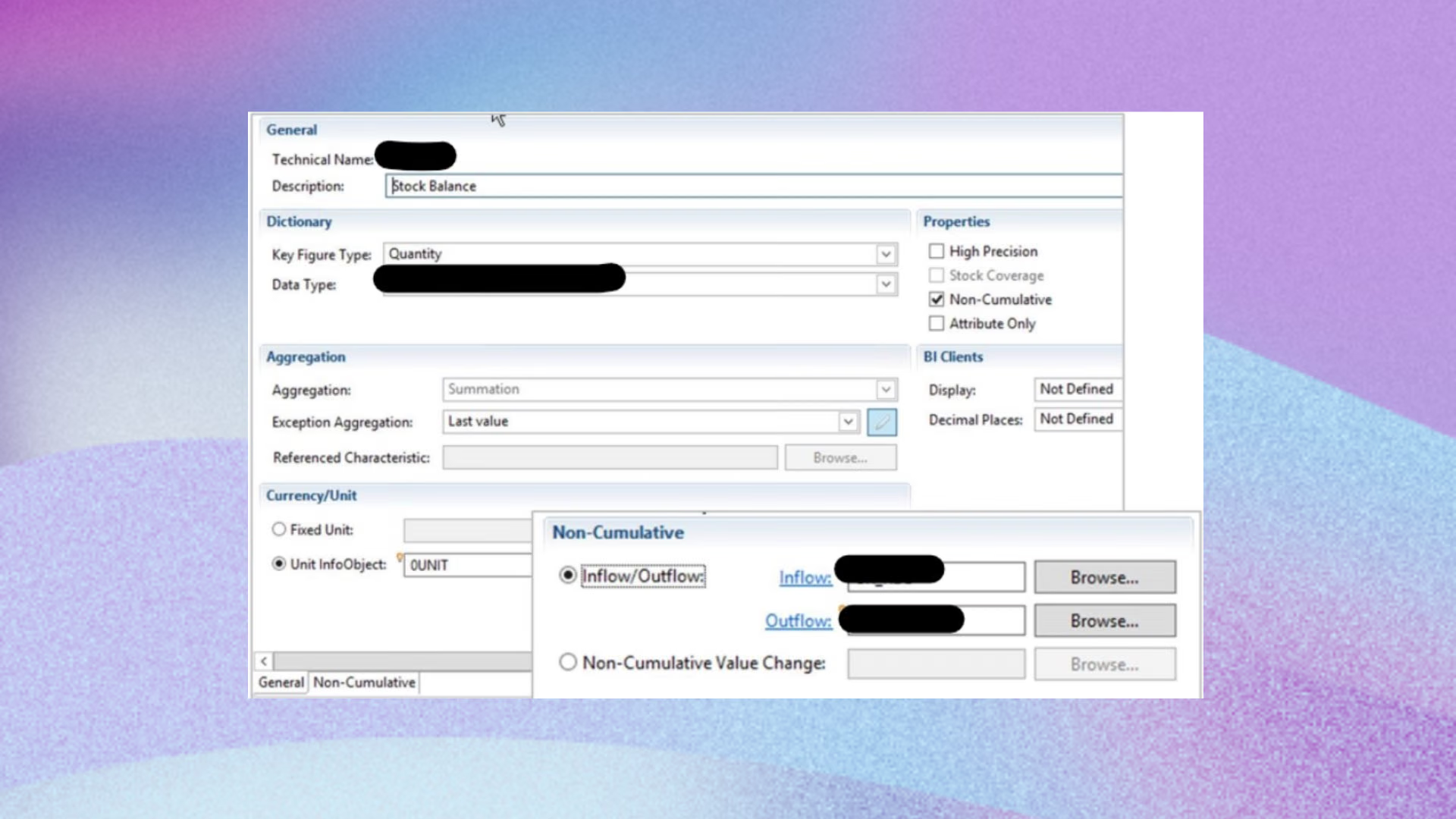
SAP IBP is a cloud-based supply chain planning suite that includes modules for demand planning, inventory optimization, sales and operations planning, and supply response. It runs on the SAP HANA in-memory platform for real-time computation at scale.
Key features
- Statistical and ML-based demand forecasting
- Integrated S&OP and IBP workflows
- Collaborative planning across business units
- Real-time analytics on SAP HANA
Who it's built for
Large enterprises already running SAP ERP systems. Best for manufacturers and distributors with complex multi-tier supply chains.
Pricing
Custom enterprise pricing. Implementation costs are significant.
4. Oracle Demantra
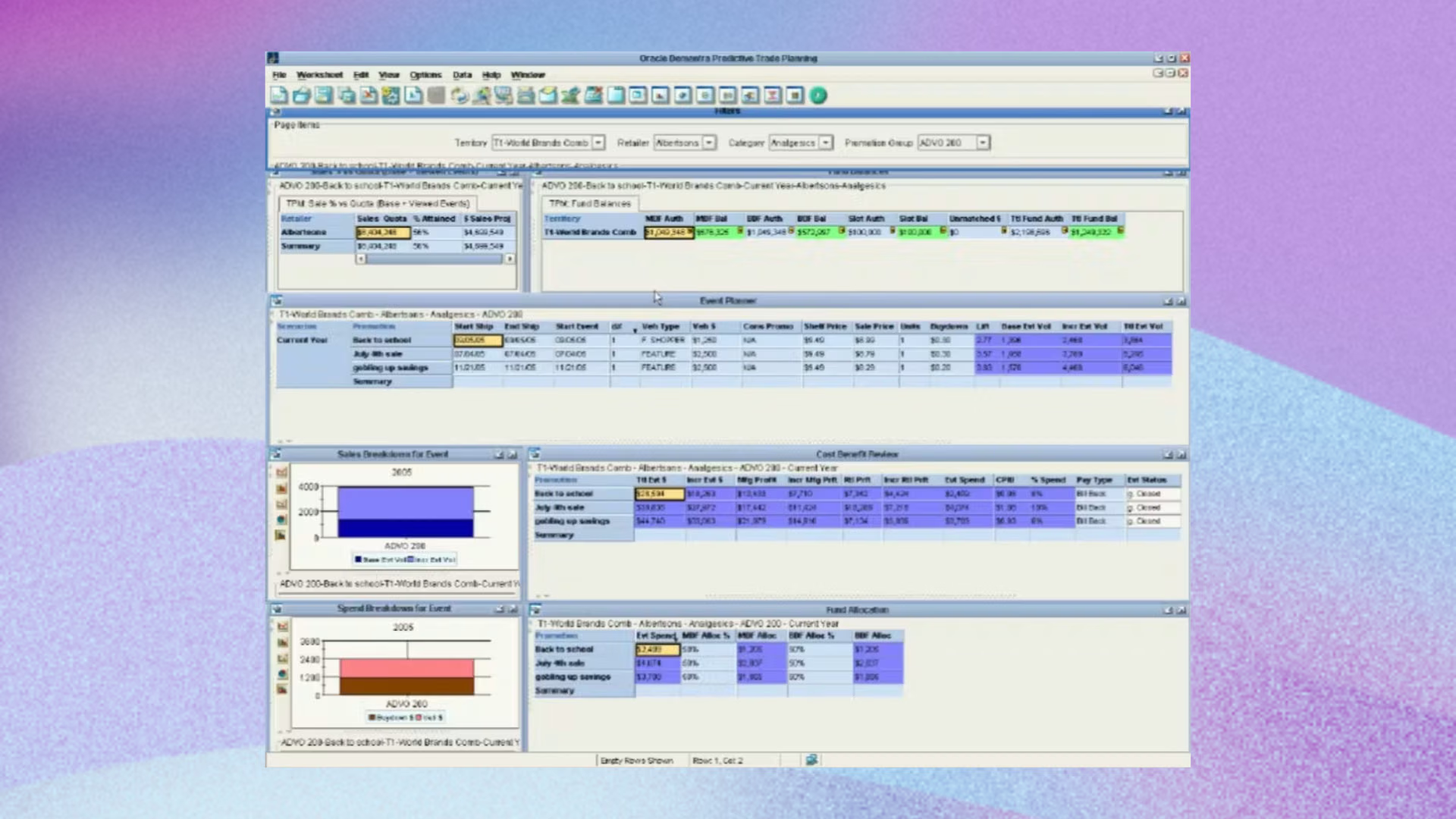
Oracle Demantra is an enterprise demand management solution that uses Bayesian forecasting to identify demand drivers and improve forecast accuracy over time. It's part of Oracle's Value Chain Planning suite and integrates with Oracle ERP systems.
Key features
- Bayesian machine learning for demand signal decomposition
- Causal factor analysis (promotions, weather, economic indicators)
- Collaborative workflow for consensus planning
- Integration with Oracle ERP and SCM
Who it's built for
Large enterprises running Oracle ERP with complex multi-channel demand patterns. Strong in CPG and retail sectors.
Pricing
Custom enterprise pricing.
5. Kinaxis RapidResponse
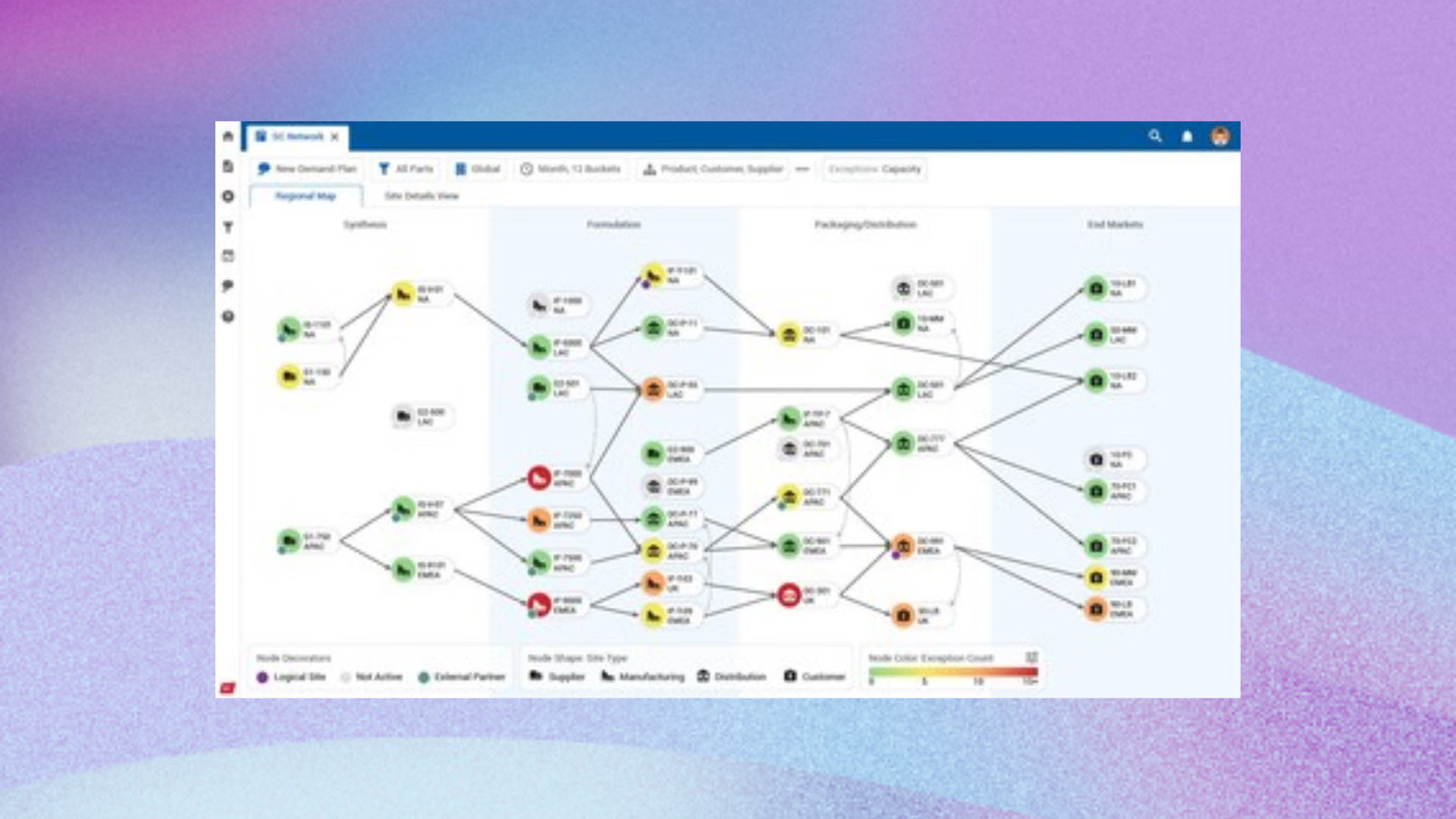
Kinaxis RapidResponse is a supply chain management platform built for concurrent planning, where demand, supply, and financial scenarios are modeled simultaneously. It's known for its ability to handle supply chain disruptions in real time.
Key features
- Concurrent supply and demand planning
- Real-time impact analysis and scenario modeling
- Multi-tier supply chain visibility
- Collaboration workspaces for cross-functional teams
Who it's built for
Mid-to-large manufacturers and high-tech companies with global supply chains that need rapid scenario response capabilities.
Pricing
Custom enterprise pricing.
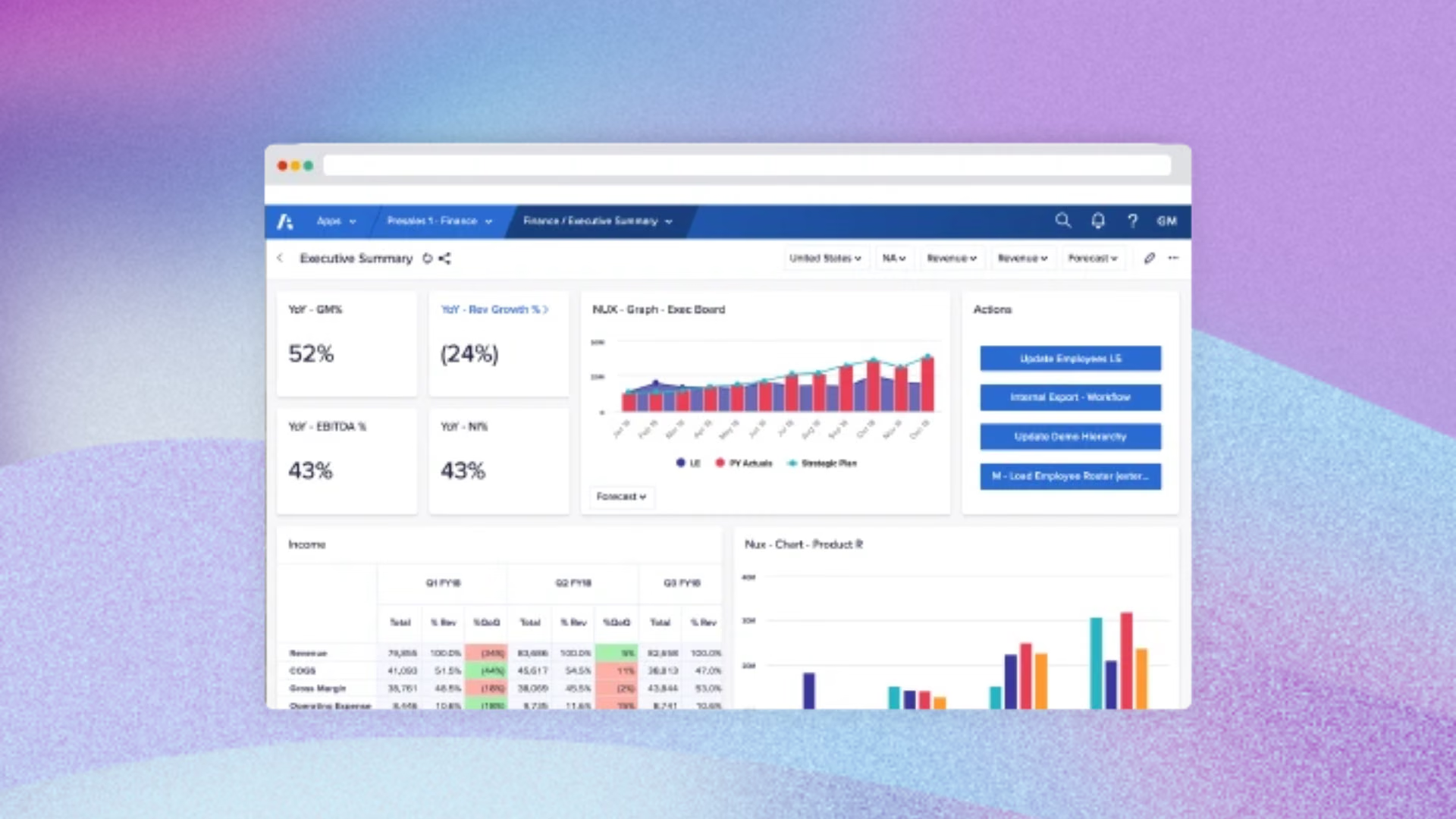
6. Anaplan
Anaplan is a connected demand planning platform that covers demand planning, financial planning, and supply chain modeling across large organizations. It's designed for companies where planning requires cross-functional alignment and financial scenario modelling.
Key features
- Connected planning across demand, finance, and supply
- In-memory calculation engine for large datasets
- Flexible modeling for custom planning scenarios
- Integration with CRM, ERP, and BI systems
Who it's built for
Mid-to-enterprise companies that need connected planning across sales, finance, and supply chain, not just inventory forecasting.
Pricing
Custom enterprise pricing.
Learn about other AI-powered inventory forecasting tools that can handle segmentation, multi-location planning
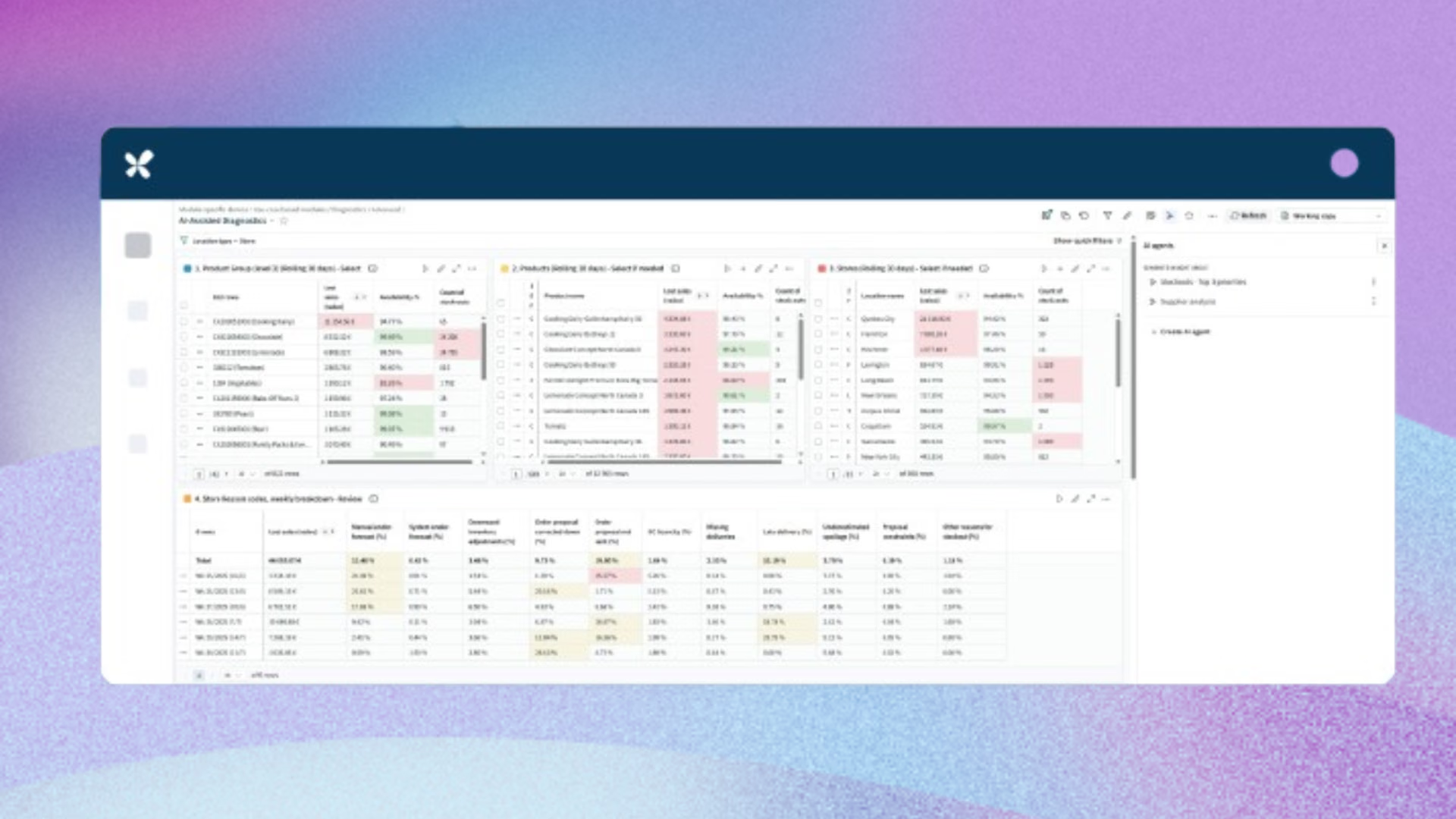
7. RELEX Solutions
Relex Solutions is a unified commerce planning platform used by retailers, grocery chains, and CPG manufacturers. It covers demand forecasting, replenishment, space planning, and workforce management in a single system.
Key features
- ML-based demand forecasting at store and SKU level
- Automated replenishment with supplier integration
- Space and category optimization
- Integration with retail ERP and POS systems
Who it's built for
Mid-to-large retailers and grocery chains with complex brick-and-mortar and omnichannel operations. Not suited for pure D2C or Shopify-native businesses.
Pricing
Custom enterprise pricing.
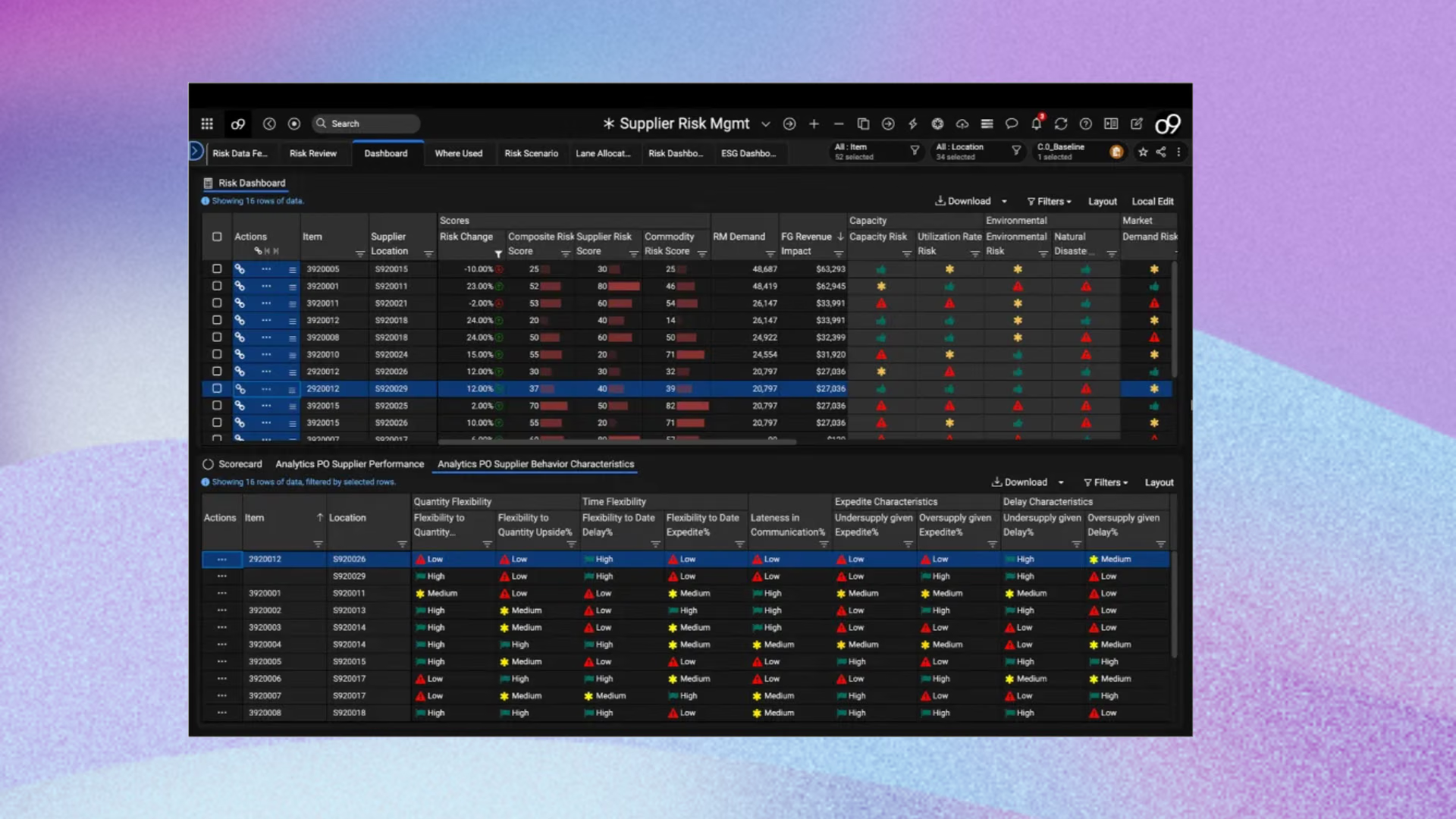
8. o9 Solutions
o9 Solutions is a next-generation AI-powered planning platform for enterprise supply chains. It offers end-to-end planning capabilities from demand sensing to supply optimization, using a graph-based data model for cross-functional visibility.
Key features
- AI/ML-based demand forecasting and sensing
- End-to-end supply chain modeling
- Scenario planning and risk simulation
- Integration with ERP, CRM, and external data sources
Who it's built for
Large enterprises in consumer goods, retail, and manufacturing that need integrated planning across the full supply chain.
Pricing
Custom enterprise pricing.
If you are still comfortable planning demand without AI, we have a wider list for your team. See our guide to the best demand planning software.
How to Choose the Right AI Demand Planning Software For Your Business Type
1. Start with your current tech stack
If you're running Shopify, you need a tool with native Shopify integration. Tools such as Prediko connect directly without middleware, pulling live sales and inventory data in real time. Enterprise platforms like SAP IBP or Oracle Demantra assume you're already on their ERP ecosystem.
2. Match the tool to your business complexity
If you have multiple stores or locations, you need tools that can handle segmentation, multi-location planning, and automated purchasing without manual overhead. Enterprise platforms add value when you have multi-tier supply chains, global distribution, or complex financial planning needs.
3. Evaluate forecasting depth, not just UI
Most tools claim AI. What matters is whether the forecast actually updates in real time, accounts for seasonality and promotions, and connects to actionable purchasing decisions, not just pretty charts.
See what all you need to evaluate in terms of demand planning KPIs and analytics
4. Consider total cost of ownership
Enterprise platforms often involve 6-18 month implementations, ongoing IT costs, and consulting fees on top of licensing. For high growth brands, select a software that deploys in hours and requires no technical setup or ongoing maintenance.
Frequently Asked Questions
What is AI demand planning software?
AI demand planning software uses machine learning to forecast future product demand by analyzing historical sales, seasonality, market trends, and other signals. Unlike rule-based systems, AI-based tools continuously refine their forecasts as new data comes in, improving accuracy over time.
How does AI improve demand forecasting accuracy?
AI models can identify complex patterns across thousands of SKUs simultaneously, account for multiple demand drivers at once, and automatically adjust forecasts when conditions change. Traditional statistical models require manual reconfiguration when trends shift; AI-based models update automatically.
What makes AI demand forecasting more accurate than traditional methods?
AI demand forecasting becomes more accurate than traditional methods because it re-evaluates the forecast every time new sales data arrives instead of waiting for a scheduled manual update, and because it forecasts at the SKU and location level instead of one blended number spread across a business.
Which AI demand forecasting software are the most accurate?
The most accurate AI demand forecasting tool is the one with the lowest forecast error on your SKUs.
Vendors measure accuracy on different datasets, so their headline claims can't be compared. Ask each tool you evaluate to backtest your last 6 to 12 months and report MAPE or WAPE (average forecast error) and bias (whether it runs consistently high or low), at SKU level.
Check SKU level specifically, because a forecast can look 95% accurate in total while still missing badly on individual SKUs. The overs on one product cancel out the unders on another, and you still stock out on your best sellers.
Stockouts are the second trap. When a SKU is out of stock, recorded sales drop to zero even though demand didn't, and a model trained on those sales learns to under-forecast. Accurate tools correct for stockout periods rather than treating them as low demand.
Is AI demand planning software suitable for small and mid-sized businesses?
Yes, particularly tools like Prediko that are built for D2C and mid-market brands. Unlike enterprise platforms that require large IT teams and months-long implementations, modern AI planning tools for Shopify brands can be deployed in hours and used without technical expertise.
How does AI demand planning software handle seasonality?
Most AI planning tools detect seasonal patterns from historical sales data and apply them automatically when generating forecasts. Advanced tools like Prediko let planners review and adjust seasonal adjustments to account for year-over-year changes, new products, or planned promotions.
What makes AI demand planning different from traditional forecasting?
Traditional forecasting relies on fixed statistical models and manual inputs. AI planning tools learn from data continuously, adjust to new signals, and can factor in complex interactions between demand drivers. The result is more accurate forecasts with less manual effort.
Which AI demand planning software works best for Shopify?
Prediko is purpose-built for Shopify and offers the most complete demand planning and purchasing workflow for D2C brands on the platform. It integrates natively with Shopify, requires no middleware, and connects forecasts directly to purchase order recommendations. Pricing starts at $49/month with a free trial available.
Can AI demand planning software handle multi-location inventory?
Some tools do and some don't. Prediko handles multi-location planning natively for Shopify brands, including multi-warehouse and multi-store setups. Enterprise platforms like SAP IBP and Kinaxis cover multi-echelon supply chain planning at global scale.
Which AI tools generate purchase orders from lead times and seasonal demand?
AI tools that generate purchase orders from lead times forecast demand for the full supplier lead time window, then turn that forecast into a suggested order quantity.
The core math is: Reorder point = forecast demand during the lead time + safety stock. Seasonality breaks tools that use a trailing average here. If your lead time is 60 days and a peak like BFCM falls inside that window, the order has to cover the forecast for the peak, not last month's run rate. Otherwise the PO lands short, just as demand climbs.
Do AI demand planning tools offer a free trial?
Yes most of the software offer a 14-day free trial, and plans start at $49/month with unlimited SKUs, users and purchase orders. Fourteen days won't cover a full seasonal cycle, so use the trial to backtest.
The enterprise platforms on this list: Blue Yonder, SAP IBP, Oracle Demantra, Kinaxis, Anaplan, RELEX and o9 all use custom pricing.
How do you measure the ROI of demand planning software before buying?
The ROI of demand planning software comes from three measurable sources: revenue recovered from fewer stockouts, cash freed from lower overstock, and hours saved on manual planning. Estimate each against your current numbers, then compare the total with the software's annual cost.
Which demand planning software has customizable dashboards and reporting?
Most demand planning software includes forecast dashboards. The difference is whether the reports track the KPIs your team actually runs on. Prediko's Analytics & Reports module tracks inventory KPIs such as turnover, plan vs. actuals and stock health, and higher plans add customized inventory reports and dashboards.
Pia, Prediko's AI inventory agent removes the need to check dashboards at all. It sends scheduled updates by email, or in Slack, on products at risk of stockout, POs that need attention and forecasts to revisit. Among the enterprise tools, Kinaxis, Blue Yonder and o9 focus on scenario modeling dashboards for multi-tier supply chains.
Which demand planning software sends stockout alerts?
Demand planning software sends stockout alerts by comparing forecast demand against stock on hand plus incoming POs, then flagging SKUs that will run out before replenishment arrives. Prediko includes buying alerts on every plan, and Pia sends daily stockout-risk and late-PO updates by email and Slack.








.avif)